
Why Wellness Feels So Overwhelming Right Now
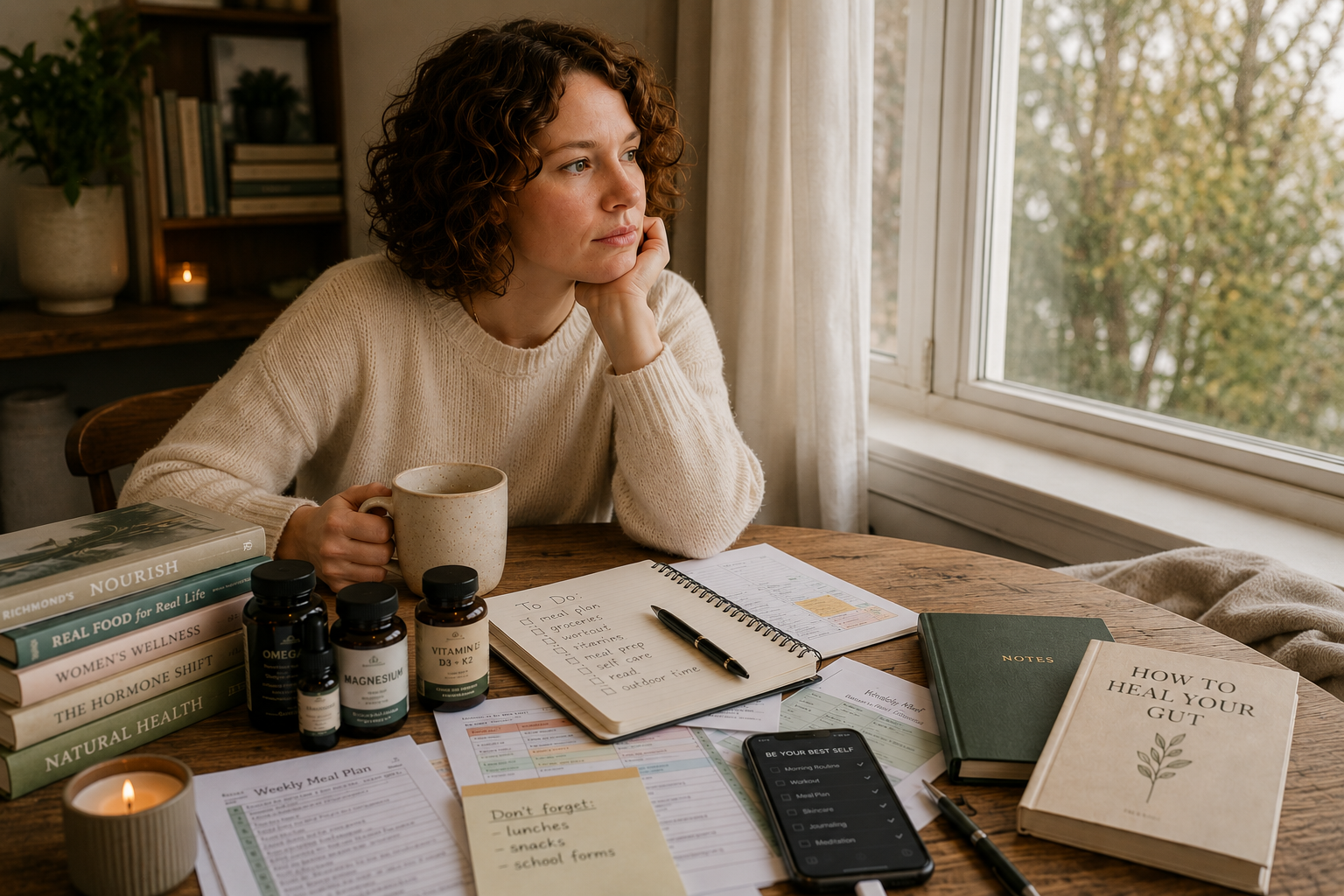
Small Evening Rituals That Help Me Feel Human Again
For a long time, I thought healing would come from finally finding the perfect routine.
For a long time, I thought healing would come from finally finding the perfect routine.
The perfect supplement stack, the perfect morning habits, the perfect workout plan, the perfect nervous system protocol. I kept thinking that if I could just get all the pieces in the right order, everything would click into place and I would finally feel like myself again.
As someone who has spent years studying nutrition, genetics, stress physiology, functional wellness, and how deeply everything in the body is connected, I genuinely understood the science behind what supports health. But what I did not fully understand for a long time was something that no amount of research could shortcut:
A dysregulated nervous system does not heal well under pressure.
And I was putting myself under a lot of pressure.
There have been seasons of my life filled with stress, emotional exhaustion, financial strain, heartbreak, burnout, overstimulation, and the invisible mental load that comes with motherhood and trying to hold life together while still showing up for everyone else. As a mother of two, there were stretches of time where my body technically made it through the day, but my nervous system never truly exhaled. I stayed in go-mode constantly, thinking, planning, managing, problem-solving, pushing through exhaustion because stopping simply did not feel like an option.
And over time, I started noticing how deeply that state was affecting me. Not just emotionally, but physically. Sleep shifted. Digestion changed. Hormones felt off. Cravings increased. Patience got shorter. Brain fog started creeping in. My body was doing what bodies do when they have been in survival mode for too long.
It was communicating.
What the Science Actually Says About Rest
When the nervous system stays in a prolonged stress response, the body prioritizes survival over repair. Cortisol and other stress hormones influence everything from digestion and blood sugar regulation to sleep quality, mood, inflammation, immune function, and hormone balance.
The body prioritizes survival over repair.
And the research on sleep loss and mood is striking. A landmark meta-analysis published in Psychological Bulletin analyzed 154 studies spanning five decades and over 5,700 participants and found that all forms of sleep loss resulted in fewer positive emotions such as joy, happiness, and contentment, alongside significantly increased anxiety symptoms. The researchers found it did not matter whether people were kept awake for extended periods, given less sleep than usual, or woken throughout the night. All three forms of sleep disruption had the same effect on emotional wellbeing. Which means that for many exhausted women, the emotional heaviness they feel is not a mindset problem.
It is a sleep and nervous system problem.
This is why I have slowly stopped viewing wellness as something that only gets built through intensity and discipline. More and more, I believe healing is also built through safety. Through small repeated moments that tell the body: you can soften now. You are safe enough to rest. You do not have to stay braced all the time.
Healing is also built through safety.
For me, some of those moments happen in the evening. Not because my evenings are perfectly peaceful, they are absolutely not, but because I have learned that small consistent rituals can genuinely help shift the body out of overstimulation and into something closer to calm. And honestly, these things have helped me feel more human again in a way that no supplement protocol ever quite managed on its own.
Tea That Signals the Day Is Slowing Down
There is something really grounding about making tea at the end of the day. The sound of the kettle, the warmth of the mug, steam rising, the kitchen finally getting quiet after hours of noise and movement. It sounds almost too simple to matter, but the nervous system responds to repeated cues in a really meaningful way. When we create consistent calming rituals, the brain begins to associate those signals with safety and rest, and over time, the body starts to relax in anticipation of them, almost before you have even sat down.
A pause. A transition. A reminder that I am allowed to slow down too.
For me tea is less about the tea and more about what it represents. A pause. A transition. A small but real reminder that I am allowed to slow down too.
Legs Up the Wall
This one has become a genuine favourite, and I recommend it to almost everyone I work with.
Sometimes I do it for five minutes, sometimes longer, but even a short stretch of lying on the floor with my legs resting up against the wall does something noticeably good for my nervous system. Research around restorative positions and parasympathetic activation, the branch of the nervous system responsible for rest and repair, continues to show how important intentional stillness is for regulation. When we slow our breathing and take the body out of its upright, alert posture, we send physical signals to the brain that the threat has passed and it is safe to shift into restoration mode.
My breathing slows.
My shoulders drop.
My mind gets a little quieter.
But beyond the science, what I notice most is just how it feels. My breathing slows. My shoulders drop. My mind gets a little quieter. It creates a moment where my body stops feeling like it needs to brace against the world for a while, and honestly, that is worth five minutes of lying on the floor any day.
Soft Music and Less Stimulation
I genuinely did not realize how overstimulated I had become until I started intentionally creating quieter evenings. Soft instrumental music, jazz, acoustic playlists, rain sounds while I clean the kitchen, these things feel small but they make a real difference in how the house feels by the time we get to bedtime.
Sometimes the most supportive thing we can do is reduce the amount of input the body is trying to process.
The nervous system is constantly taking in information from the environment around us. Noise, lighting, screens, clutter, and background stimulation all affect how safe or activated the body feels at any given moment. Sometimes the most supportive thing we can do for our nervous system is not to add another tool or protocol, but to simply reduce the amount of input it is trying to process at once. Less noise in the evening is one of the most underrated things I have done for my own regulation.
Dim Lighting and Calmer Spaces
Switching off the overhead lights in the evening is one of the simplest things I have done that made a noticeable difference, and there is solid research behind why it works.
The house itself feels like it is exhaling.
But beyond the biology, softer lighting just changes the whole atmosphere of the home. It feels calmer, gentler, more grounded. Almost like the house itself is exhaling alongside you.
Scent, Atmosphere, and Feeling Cared For
Environment matters.
The older I get, the more I believe that healing is not only physical. Environment matters in ways that are easy to underestimate. The scent of lavender, clean sheets, a candle burning quietly, fresh eucalyptus in the shower, a calm room after the children are asleep, these things communicate something to the nervous system. They signal care.
People need softness.
And when you have spent long stretches in stress or survival mode, small sensory moments can become surprisingly powerful reminders that you deserve to be taken care of too. Not because you earned it, not because everything is perfectly done, but simply because you are a person and people need softness.
The Small Things Are the Foundation
I still have overstimulated evenings. I still have hard days and moments where I feel stretched thin and completely disconnected from myself. I am not sitting here writing this from some perfectly regulated, always-calm place. But I genuinely no longer believe that wellness is something built through perfection or intensity alone.
I think it is built through small repeated moments of support.
I think it is built through small repeated moments of support. A warm mug of tea, legs up the wall, soft music, dim lighting, a calming scent, a slower breath at the end of the day. Tiny rituals that, over time, help the body feel safe enough to soften again.
And sometimes, that is exactly where healing begins.
And sometimes, that is exactly where healing begins. Not in a dramatic overhaul, but in a quiet Tuesday evening where you made tea and let yourself sit down.
