
Creating Calmer Bedtime Routines for Overstimulated Families
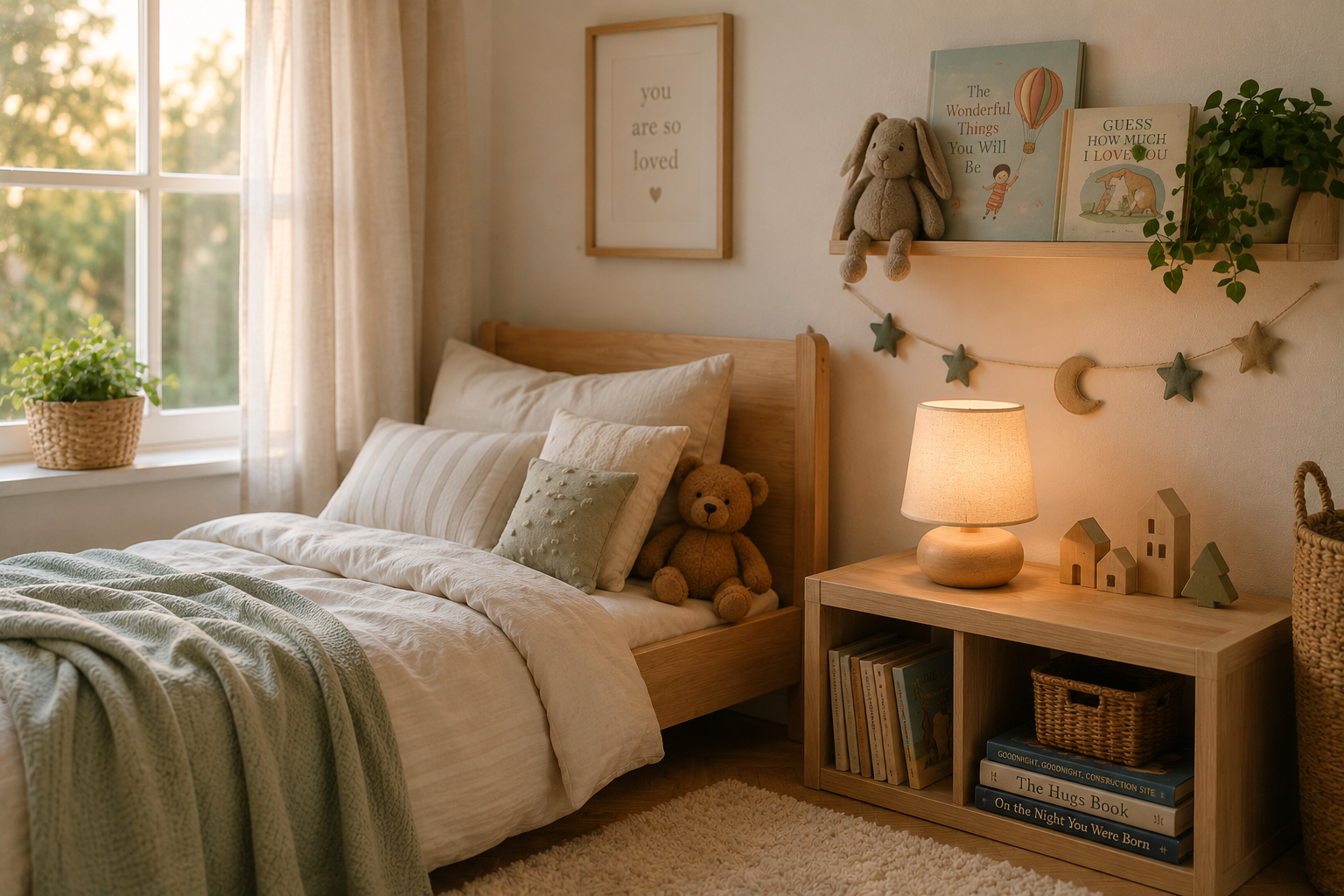
I think many families are more overstimulated than they realize.
Not because parents are doing something wrong.
But because modern life is incredibly loud.
Screens.
Schedules.
Sports.
Homework.
Notifications.
Bright lights.
Background noise.
Fast food eaten in the car.
Bedtimes that feel rushed.
Parents trying to answer emails while making lunches, cleaning kitchens, and reminding children to brush their teeth for the fourth time.
Many homes are carrying a level of nervous system overload that simply feels normal now.
And honestly, I understand that deeply.
As a mother of two boys, I know how chaotic evenings can become.
There are nights where everything flows beautifully.
And there are nights where everyone is overtired, emotionally stretched thin, overstimulated, and just trying to make it to bedtime without someone crying, including sometimes me.
Over the years, I've realized something important:
Children's nervous systems often mirror the environment around them.
Not perfectly.
Not always.
But humans are deeply responsive to atmosphere.
And bedtime is one of the biggest opportunities we have to help the body transition out of stimulation and into safety.
Because biologically, the nervous system needs cues.
Cues that tell the body:
The day is slowing down now.
You are safe.
You can rest.
Modern life has removed many of those natural cues.
Bright overhead lighting
Constant screen exposure
Noise
Fast transitions
Late sugar intake
Overpacked schedules
Parents running on stress hormones and exhaustion
Which is why I've become much more intentional about creating softer evenings in our home.
Not perfect evenings.
Softer ones.
Lowering the Stimulation in the House
One of the biggest things that changes the feeling of our evenings is reducing stimulation slowly instead of expecting everyone to instantly calm down at bedtime.
Children often cannot shift from full stimulation to complete calm in five minutes.
Honestly, most adults cannot either.
So now I think more about transitions.
Dimmer lights
Softer music
Turning the television off earlier
Quieter voices
Warm baths or showers
Calmer activities before bed
The nervous system responds to environment constantly.
And sometimes small environmental changes make a surprisingly big difference.
Creating Predictable Rhythms
Children's nervous systems thrive with predictability.
Not rigid perfection.
Rhythm.
The brain feels safer when it knows what comes next.
A Simple Bedtime Rhythm
Brush Teeth → Bath → Books → Tea or Water → Snuggles → Dim Lights → Bedtime
Simple repeated patterns help reduce nervous system stress because the body begins anticipating rest and safety.
And honestly, I think adults benefit from this too.
Supporting Blood Sugar and Nutrition
One thing I notice often, both personally and professionally, is how much food influences emotional regulation and sleep.
Children running on sugar crashes, processed snacks, or inconsistent meals often struggle more with emotional regulation and bedtime transitions.
And adults do too.
Blood sugar influences:
Mood
Energy
Focus
Sleep quality
Nervous system regulation
Instead of focusing on perfect eating, I focus on supportive foundations:
Enough protein
Balanced meals
Fibre
Hydration
Magnesium-rich foods
Reducing processed snacks and dyes where possible
Consistent meals instead of chaotic grazing
Not perfection.
Support.
Bedtime Is Emotional Too
I think bedtime often becomes difficult because it's one of the first quiet moments of the day.
And sometimes emotions finally catch up to everyone.
Children who held themselves together at school all day suddenly melt down.
Parents finally feel their own exhaustion.
The nervous system no longer has distractions keeping everything busy and buffered.
I've learned that bedtime often needs less control and more connection.
More softness.
More slowing down.
More co-regulation.
Because nervous systems calm nervous systems.
And honestly, children rarely need perfectly regulated parents.
They just need parents who are trying to create safety and repair when possible.
Small Things Matter
Some of the things that help our evenings feel calmer are incredibly simple:
Lamps instead of bright overhead lighting
Soft music
Reading before bed
Lavender spray on pillows
A consistent bedtime rhythm
Less rushing
Tea while the house quiets down
Limiting screens before bed
Quieter transitions through the evening
Slowing my own nervous system down first
Because children feel our energy more than we realize.
And truthfully, I think many families are craving softer rhythms right now.
Not perfect homes.
Not perfect parenting.
Just homes that feel a little calmer.
A little safer.
A little less overwhelming to exist inside.
The older I get, the more I believe wellness is not only about supplements, workouts, or nutrition protocols.
It's also about atmosphere.
The feeling of the home.
The pace of the evening.
The tone of our routines.
The nervous system state we are living inside every day.
